

How to Use Makeup to Help Hide Wrinkles
As we age, our skin naturally changes. Fine lines, wrinkles, and texture can start to appear, which means the way we apply makeup may need to change as well. The truth is, piling on heavier foundation or layering product isn’t the answer. In fact, too much makeup can actually make wrinkles look more noticeable.
The key to achieving a smooth, youthful complexion is using less product, better formulas, and strategic application techniques. With the right approach, makeup can blur the look of fine lines, brighten your complexion, and enhance your natural skin without settling into wrinkles.
Below are expert tips on how to use makeup to minimize the appearance of wrinkles and create smoother-looking skin.
-

1. Start With Proper Skin Prep
Before applying makeup, it’s important to prepare your skin properly. Makeup always looks best when applied to hydrated, smooth skin.
As we age, the skin can become drier and more textured. Applying makeup over dry skin can cause foundation and concealer to settle into fine lines and emphasize wrinkles.
To create a smooth canvas:
- Use a gentle exfoliant regularly
- Apply a hydrating moisturizer
- Incorporate ingredients like retinol, peptides, or hyaluronic acid into your skincare routine
Healthy, well-hydrated skin helps makeup blend seamlessly and reduces the appearance of wrinkles.
- Use a gentle exfoliant regularly
-

2. Use a Hydrating Primer
A line smoothing primer is one of the best tools for creating smoother-looking skin. Primers help fill in pores and fine lines while creating a barrier between your skin and makeup.
Applying primer before foundation can help:
- Blur the look of fine lines and wrinkles
- Smooth uneven texture
- Improve makeup longevity
- Prevent makeup from settling into creases
For example, primers formulated with hydrating and skin-supporting ingredients can help skin retain moisture while creating a soft-focus effect that visually minimizes texture. Some formulas even contain peptides and hydrators that help improve the appearance of skin over time.
- Blur the look of fine lines and wrinkles
-

3. Use Concealer Strategically (Less Is More)
When it comes to concealer for mature skin, precision matters more than quantity.
Many people try to cover signs of aging by applying more makeup, but this can actually emphasize texture. Instead, use small, targeted amounts of a highly pigmented concealer only where needed.
Concealer works best when used to correct:
- Dark circles
- Age spots
- Blemishes
Professional makeup artists often recommend using tiny “pin-dot” amounts of concentrated concealer and tapping it into the skin instead of blending aggressively. Ultra-pigmented concealers can deliver strong coverage with minimal product, which helps prevent buildup and creasing.
- Dark circles
-

4. Apply Foundation Lightly
Foundation should enhance your complexion, not mask it.
Heavy or thick foundation formulas can easily settle into wrinkles and fine lines, making them more visible. Instead, choose a lightweight, hydrating foundation that evens out skin tone while still looking natural.
For the most flattering results:
- Use a small amount of product
- Apply with a damp sponge or brush
- Focus on the center of the face and blend outward
Using a damp sponge slightly dilutes foundation, helping it blend more seamlessly into the skin and reducing the chance of product collecting in wrinkles.
A buildable, hydrating foundation formula can even help smooth the look of texture while keeping the skin comfortable throughout the day.
- Use a small amount of product
-
5. Blur Lines With Targeted Products
For deeper expression lines such as crow’s feet, smile lines, or forehead lines, you can use targeted products designed to blur texture.
Line-smoothing primers and blurring treatments can be applied after your makeup to soften areas where wrinkles are most noticeable. These formulas often work by filling in micro-texture and diffusing light to create a smoother visual effect.
Ingredients such as:
- Neodermyl
- Hydrating ceramides
- Hyaluronic acid
These can help hydrate and plump the skin while visually minimizing fine lines.
Gently tap a small amount onto areas with deeper lines rather than rubbing it in.
- Neodermyl
-
6. Choose Softer Makeup Shades
The colors you choose for your makeup can also influence how youthful your skin appears.
Very dark or harsh shades can sometimes make features look heavier and emphasize shadows. Instead, opt for soft, natural tones that brighten the complexion.
Flattering shades for mature skin often include:
- Peachy blush tones
- Soft pink lip colors
- Warm neutral eyeshadows
- Sheer luminous finishes
These colors help bring warmth and brightness back to the face, creating a healthy, radiant glow.
- Peachy blush tones


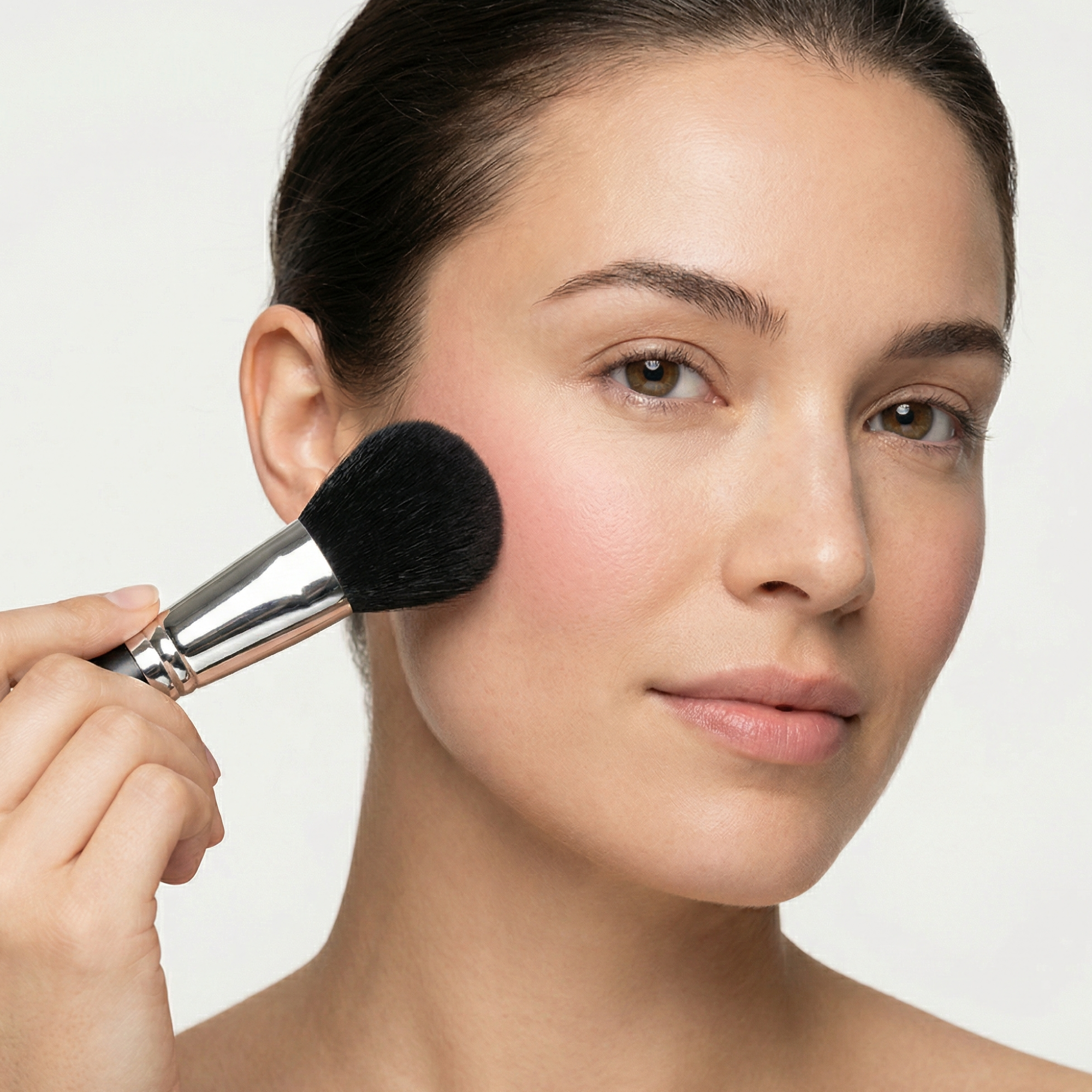
Final Takeaway: Less Makeup, Better Results
When it comes to makeup for aging skin, the goal isn’t to hide your skin—it’s to enhance it.
The most effective way to minimize the appearance of wrinkles is by focusing on:
✔ Hydrated, well-prepped skin
✔ Lightweight, smoothing formulas
✔ Small amounts of highly pigmented products
✔ Strategic placement of concealer and foundation
By using less product and smarter techniques, you can create a complexion that looks smooth, radiant, and natural at any age.


